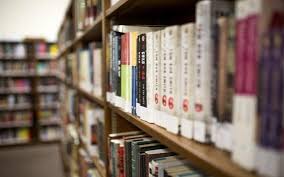
Browsing is a skill, and like most skills it looks like doing nothing much to anyone who has not learned it. The difference between a visitor who leaves a used bookstore with nothing and one who leaves with three things they did not know existed is almost entirely method.
A used bookstore is not organised like a new one. There is no front-of-store table reflecting this month’s publishing schedule, no multiple copies, and no guarantee that anything you saw last time is still there. What there is instead is a constantly shifting inventory of individual objects, arranged by people who know their stock.
This article is about how to read that environment, written by people who watch several hundred customers a week either find what they came for or walk past it.
Understand How the Stock Arrives
Almost everything on a used bookstore’s shelves arrived as part of a collection: an estate, a downsizing household, a retired professional’s working library, a box of trade-ins. It did not arrive one title at a time from a distributor.
That has a direct consequence for browsing. Stock comes in clumps, so a section can be transformed in a week if one relevant collection arrives, and unchanged for months otherwise.
It also means related books tend to appear together. When you find one unexpectedly good title in a section, the rest of that collection is usually within a shelf or two of it, and it is worth scanning either side rather than moving on.
Walk the Whole Store Before You Stop
The most common browsing mistake is going straight to the section you always visit and spending your entire time there. You will find what you expect, which is precisely the problem.
A single slow lap of the whole store first does two things: it tells you what has changed since last time, and it puts you in front of sections you would never choose deliberately.
The best finds most customers report come from this lap, not from the targeted search afterwards. A book you did not know you wanted cannot be on your list, and the only way to encounter it is to walk past it.
Read Spines Properly
Browsing is mostly spine-reading, and most people do it too fast and at the wrong height. Spines at eye level get read; spines at ankle level do not, which is exactly why interesting things survive on bottom shelves.
- Work one shelf at a time rather than scanning whole cases
- Crouch for the bottom shelf; most browsers never do
- Check the top shelf, where oversized books get exiled
- Look for unusual spine widths and hand-lettered titles
- Pull anything with no spine text at all, which is often the scarcest item present
That last point is worth taking seriously. Small-run local publications, pamphlets, and stapled society volumes frequently have nothing printed on the spine, and they are invisible to anyone reading only titles.
Take the Book Down
A spine tells you almost nothing. The decisions that matter, edition, condition, completeness, whether the plates are there, whether it is even the book you think, all happen with the volume in your hands.
Open to the title page and its verso first. That is where the publisher, date, and edition live, and where a great many assumptions get corrected.
Then check the physical state: hinges, spine ends, whether the text block is tight, and whether anything is missing. Thirty seconds of this saves the disappointment of getting home with the wrong printing of the right book.
Ask the Obvious Question
Booksellers in used shops know their stock in a way that is hard to convey. They know what came in last week, what is in the back waiting to be priced, which of two editions has better plates, and which regular customer has been looking for exactly what you just described.
Almost nobody asks. Customers browse for forty minutes and leave without mentioning what they were actually after, which is the most reliable way to miss something sitting ten feet away in an unsorted box.
Say the specific thing. Not I like history, but I am looking for anything on coal mining in the Bow Valley. The second sentence gets an answer; the first gets a gesture toward a section.
Browsing With a List and Without One
Both modes are valid and they work best in sequence. Arrive with a want list, but do not start with it. Lap the store first with an open mind, then work the list, then ask about anything the list did not turn up.
The list protects you from buying the same book twice and from forgetting the edition you needed. The open lap protects you from only ever finding what you already knew about.
A workable routine
- One slow lap of the whole store, no decisions made
- Return to anything you flagged and examine it properly
- Work through your want list section by section
- Ask the bookseller about the gaps
- Decide at the counter, not while standing in the aisle
Knowing When to Decide Immediately
In a shop where every copy is unique, hesitation has a cost that does not exist in new retail. There is no second copy in the back, and if the book sells this afternoon it may be years before another appears.
For common titles this hardly matters. For scarce regional material, small-press work, exhibition catalogues, and anything you have looked for more than once before, it matters a great deal.
The heuristic most experienced browsers use is simple: if you would be annoyed to see it gone next visit, buy it now. If you would shrug, leave it. That question is easier to answer honestly in the aisle than any calculation about price.
Timing, Seasons, and When New Stock Appears
Used bookstores restock unevenly, and the rhythm is worth learning. Estate collections are processed in batches, so a section can change completely within a week and then sit still for two months.
Seasonal patterns matter too. Households clear out in spring and before moves; trade-ins rise after the holidays; and in tourist towns the summer brings both heavy buying and a stream of books left behind by visitors.
The practical conclusion is that frequency beats duration. Four short visits across a month will show you more new stock than one long visit, and regulars who drop in often are the ones who see the good collections first.
Reading the Shop Itself
The organisation of a used bookstore tells you how it thinks. Sections that are unusually deep indicate either local demand or a specialty; a shelf of unpriced books near the counter means a collection is being processed.
Look for where related subjects have been shelved together against strict alphabetical logic. That is usually deliberate, and it reflects how customers in that shop actually search.
- Unusually deep sections, which signal a house specialty
- Boxes or trolleys of unsorted stock, worth asking about
- Locked or glass cases holding scarcer material
- Bottom and top shelves, where oversized and odd-sized items land
- Shelf labels in handwriting, often a sign of a recent reorganisation
Browsing With Children, and Browsing With Time Limits
Two situations defeat most browsing plans: a short window and company that is not browsing. Both are manageable with a change of approach rather than an abandoned visit.
With twenty minutes, skip the lap and go straight to a request. Ask, describe what you want precisely, and let the bookseller do the searching; that converts your limited time into their knowledge.
With children, most used bookstores have a children’s section for exactly this reason, and many keep activity or colouring books to hand. Starting there buys the adult in the party a genuine half hour, which is the difference between a visit and a glance.
Browsing Online Versus Browsing in Person
Online catalogues and physical shelves are complementary rather than competing, and they fail in opposite directions.
A catalogue search is precise and exhaustive for anything you can name. It is completely useless for anything you cannot, and it hides everything a seller has not yet listed, which in most used bookstores is a substantial share of the stock.
- Search when you know the title, author, or edition
- Browse when you want to find what you did not know existed
- Search for comparing prices and confirming scarcity
- Browse for judging condition, plates, and printing quality
- Ask a bookseller for everything that is neither listed nor shelved yet
The third category is larger than most customers assume. Books waiting to be priced, collections still in boxes, and material set aside for regular customers never appear in any search, and the only route to them is a conversation.
Browsing Etiquette That Actually Helps
Very little is expected of a browser beyond ordinary care, but a few habits make the experience better for everyone, including the next customer.
Reshelve roughly where you found a book, or hand it to the counter rather than guessing; a misfiled book in a shop with forty thousand volumes is effectively lost until someone stumbles on it. Handle older bindings gently and do not force a book open flat.
And if you are looking for something specific and leave without asking, the shop has no way to help you next time either. A sentence at the counter costs nothing and frequently turns into a note in a file that surfaces months later when the right collection arrives.
What Browsing Is Actually For
It is tempting to treat browsing as an inefficient way of acquiring books, since a search box is faster for anything you can name. That misunderstands the activity.
Browsing is for the books you cannot name. Search rewards precision and returns what you asked for; shelves reward attention and return things you did not know to ask for. Those are different tools, and the second one has no substitute.
It is also, unapologetically, a pleasant way to spend an hour. The unhurried walk along a shelf, pulling things down, putting most of them back, is one of the few remaining forms of shopping that is genuinely enjoyable in itself. Bring a list, leave time, ask a question, and expect to leave with at least one thing that was not on any plan you arrived with.