National histories deal in decades and policies. Local histories deal in families, buildings, mine shafts, and the year the bridge washed out. They are written by people who lived through some of what they describe, and they are frequently the only record that exists.
The Bow Valley is unusually rich in this kind of writing because so much happened here in a short span: a railway survey, a coal boom, the creation of a national park, and a transition from resource town to mountain community, all inside a century and a half.
This article is about how that local record was assembled, what forms it takes, why so much of it is hard to find, and how to read it critically without dismissing what makes it valuable.
Who Writes Local History, and Why
Most local history is produced by people with a direct stake in it: historical societies, anniversary committees marking a town’s centenary, retired teachers, the children of the families being described, and occasionally a single determined resident with a filing cabinet.
The motivation is usually preservation rather than publication. Someone realises that the generation who remembers the mine closing is getting older, and decides to write it down before the memory disappears entirely.
That origin shapes everything about the resulting books. They are detailed, affectionate, uneven, and organised in ways that make sense to the community rather than to an outside reader. They are also, very often, the only place certain facts are recorded at all.
The Forms Local History Takes
Local history rarely arrives as a conventional monograph. It appears in a range of formats, many of which were never intended for the book trade.
- Anniversary and centennial volumes produced by a town committee
- Historical society journals, newsletters, and occasional papers
- Family history and memoir printed for relatives
- Photographic collections with extended captions
- Church, school, and club histories marking an anniversary
- Mine, railway, and park service staff records compiled by former employees
- Oral history transcripts gathered by a local project
Each form has its own character. Anniversary volumes are strong on names and photographs and weak on analysis. Oral history transcripts are vivid and unreliable in exactly the ways human memory is unreliable. Staff compilations are dry and frequently the most accurate thing in the room.
Coal, Railway, and the Shape of a Town
Canmore’s local history begins with coal and the railway, and almost everything in the older literature returns to those two subjects eventually. The mines determined where people lived, which nationalities arrived, how the town was laid out, and what happened when the seams closed.
The railway did something different: it brought the survey, then the construction crews, then the tourists, and then the marketing effort that turned the mountains into a destination rather than an obstacle.
Reading the two threads together explains the physical town. Street patterns, surviving miners’ cottages, the location of the original townsite, and the way the community sits relative to the tracks all make sense only with that history in hand.
Photographs as Primary Evidence
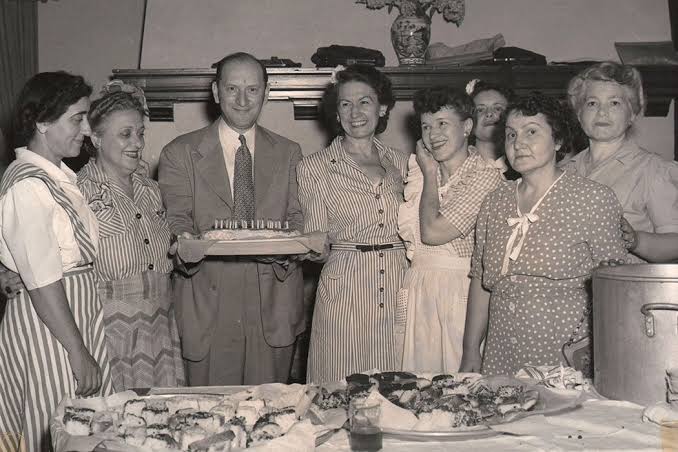
Local history books lean heavily on photographs, and for good reason: in a town where the written record is thin, an image of a main street in 1920 carries an enormous amount of information.
Captions are where the value concentrates. A photograph labelled simply Main Street is decorative; one labelled with the year, the direction of view, and the names of the people standing outside the store is evidence.
Worth knowing: many local history volumes reproduce photographs from private family albums that were never deposited in any archive. When the book goes out of print, those images effectively go back into private hands.
This is one of the strongest arguments for keeping local publications in circulation rather than letting them disappear into basements.
Reading Critically Without Being Dismissive
Local histories have characteristic weaknesses. They tend to be celebratory, they under-represent people who left, and they frequently omit conflict, labour disputes, and the experiences of communities who were not doing the writing.
Older volumes in particular often treat Indigenous presence as prehistory rather than as continuing history, and describe the arrival of settlers as the beginning of the story rather than one chapter in a much longer one.
The right response is not to discard them but to read them alongside other sources: archaeological work on earlier occupation, Indigenous authors writing about the same territory, labour histories, and archival records. Local history is strongest as evidence of what a community chose to remember, which is itself a historical fact worth knowing.
Why These Books Are So Hard to Find
Print runs for local history are small, typically a few hundred copies, occasionally fewer. They were sold at the museum, the hardware store, and the anniversary weekend, and then they were gone.
There is rarely a second printing, because the committee that produced the first one has usually disbanded. Nobody holds the rights in any practical sense, no distributor carried it, and it appears in no standard bibliography.
The result is that copies surface only when a household is cleared. We see them arriving in estate collections regularly, often several at once, and they leave the shop faster than almost anything else we handle.
Using Local History for Family Research
Genealogists are among the most frequent readers of this material, and for a specific reason: local histories name people that no national source ever mentions.
A mine payroll reproduced in an anniversary volume, a school class photograph with a caption listing every child, a church membership roll, a list of volunteer firefighters in 1931, these are the records that let a researcher place an ancestor in a specific year and street.
Where to look first in a local volume
- Photograph captions and their name lists
- Appendices reproducing rolls, payrolls, and membership records
- Family sections, often arranged alphabetically at the back
- Cemetery and memorial listings
- Business directories reproduced from an earlier year
If you are researching a particular surname, it is worth telling a bookseller in the region. We flag material as it arrives far more reliably than any catalogue search will.
Maps, Plans, and Townsite Records
Maps are among the most useful and least appreciated material in local history. Townsite plans, mine surveys, fire insurance plans, and early trail maps show the physical organisation of a place in a way no narrative does.
They are also fragile and frequently removed. Folded maps in the rear pocket of a local history volume are missing more often than not, and a complete copy with its maps intact is substantially more useful than one without.
- Original townsite subdivision plans
- Mine workings and surface plans
- Early road, trail, and railway alignments
- Fire insurance plans showing individual buildings
- Park boundary maps across successive revisions
Newspapers and the Weekly Record
Local newspapers are the underlying source for a great deal of local history writing, and where runs survive they are extraordinarily detailed: births, deaths, court reports, mine accidents, school results, and advertisements week by week.
Bound volumes rarely reach the private market, but compilations, anniversary reprints, and excerpted selections do, and these often reproduce material that is otherwise available only in an archive.
When a local history book quotes a newspaper heavily, that is usually a sign of careful work rather than laziness, and it makes the resulting volume far more useful as a research starting point.
Preserving and Sharing What You Find
Local history collections built privately have a habit of dispersing, and material that took decades to assemble can be lost in a single afternoon of clearing out a house.
If you build such a collection, it is worth recording what is in it, keeping ephemera with the volumes it relates to, and letting a local museum, archive, or library know it exists.
A small act with long consequences: writing the town, group, and year inside an unidentified local publication, in pencil, makes it findable for the next researcher. Many of these volumes carry no identifying information on the spine or cover at all.
Starting Your Own Local Research
Readers who spend long enough with local history frequently end up producing some, and the entry point is usually narrower than a town history: one building, one family, one mine, one year.
Start with what has already been written, then work outward to the sources those writers used. Most local history books name their sources loosely, in acknowledgements or captions, and those names point toward archives, societies, and individuals still holding material.
- Published local histories and society journals for the area
- Municipal, provincial, and park archives
- Newspaper runs, in print or digitised
- Cemetery, church, and school records
- Living residents, whose recollections have a deadline
That last point is the urgent one. The reason so many local histories exist at all is that someone realised the generation who remembered a particular period was getting older, and decided to write it down while there was still time to ask.
Oral History and Its Limits
Oral history projects have recorded a great deal of what is known about life in the valley, and transcripts occasionally reach print in local volumes. They are vivid, specific, and unreliable in exactly the ways memory is unreliable.
Dates drift, sequences compress, and the same event is remembered differently by two people who were both present. None of that makes the material worthless; it makes it evidence of what was remembered rather than of what occurred.
Read alongside documentary sources, payroll records, newspapers, and municipal minutes, oral testimony supplies the texture that records never carry: what a shift underground felt like, what the town smelled like, and what people actually worried about.
Keeping the Record in Circulation
There is a practical conservation argument buried in all of this. A local history that sits in a box in a basement for thirty years is, functionally, lost, and the ones that get damp are lost permanently.
Every copy that moves from an estate through a bookstore to a researcher, a family, or a local library is a copy that stays available. That is not a sentimental claim; it is the actual mechanism by which small-run regional publishing survives at all.
So the advice we give is simple. If you come across a slim, locally produced history of a town, a mine, a church, or a valley, and it costs the price of lunch, buy it. You may be handling one of a few dozen surviving copies, and the next person researching that place will be very glad somebody did.